

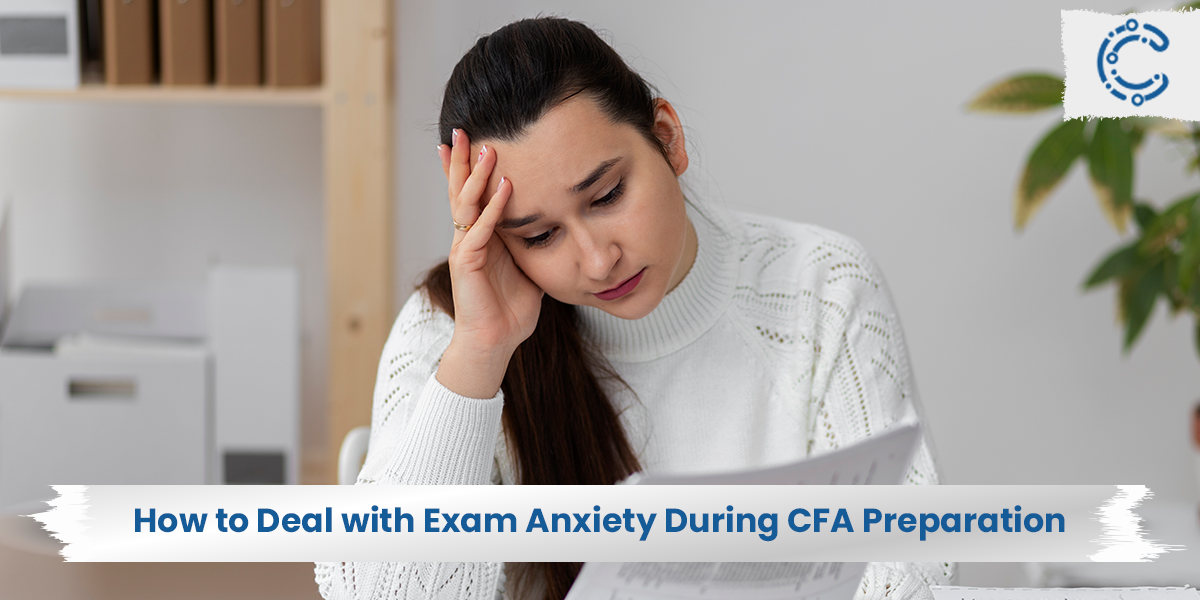
In most cases, anxiety during CFA preparation reflects uncertainty in the process, not a lack of ability. When preparation feels unstructured or progress is unclear, stress naturally builds up. The good news is that exam anxiety can be managed with practical adjustments rather than drastic changes.
Why Exam Anxiety Is Almost Inevitable in CFA Preparation
Anxiety often builds up because the syllabus is vast, study timelines feel stretched, and progress is difficult to measure on a daily basis. Add to this the challenge of balancing work and academics and stress becomes a natural response. Mock exam scores that fluctuate and constant exposure to peer comparisons or online discussions further amplify this feeling.
This does not indicate weakness. It is a predictable outcome of preparing for a demanding professional exam.
How Anxiety Quietly Disrupts CFA Preparation
Students may find it harder to concentrate, start overthinking small mistakes, or keep changing study strategies in search of reassurance. Some begin avoiding mock exams, while others push themselves into unsustainable study hours. Over time, this leads to mental fatigue and burnout, especially as the exam approaches.
When anxiety takes control, preparation decisions are driven by emotion rather than logic.
Practical Ways to Manage Exam Anxiety During CFA Preparation
Shift Focus from Results to the Preparation Process
Build a Study Plan That Is Realistic, Not Ideal
Treat Mock Exams as Feedback, Not Judgment
Reduce Comparison and Information Overload
Prioritise Consistency Over Long Study Hours
Common Reactions That Increase Anxiety (and Should Be Avoided)
Such responses increase uncertainty rather than resolving it.
Handling Anxiety in the Final Weeks Before the CFA Exam
Revising familiar material, maintaining basic routines like sleep and meals, and practicing questions under timed conditions help create stability. The final weeks are not the time for aggressive changes. Confidence close to the exam comes from familiarity, not last-minute effort.
When Anxiety Is a Useful Signal
Instead of ignoring anxiety, candidates should pause and assess whether their study plan is realistic, whether revision is sufficient, and whether mock results are being interpreted correctly. Small, timely adjustments usually reduce anxiety significantly.
In such situations, guidance from a structured CFA preparation framework and experienced mentors such as the approach followed by Prof. Vinit Mehta—often helps candidates regain clarity and confidence without unnecessary pressure.
Conclusion
A structured preparation approach, realistic planning, and consistent routines help reduce anxiety and improve preparation quality. Calm, disciplined preparation almost always leads to better outcomes than panic-driven effort.
Frequently Asked Questions
Yes. Most CFA candidates experience anxiety at some stage, particularly during long preparation cycles or after mock exams.
Stress reduces when preparation is structured, revision is regular, and mock exam feedback is interpreted objectively.
Initially, they can. Over time, mock exams reduce uncertainty and build exam familiarity when used correctly.
Planning your CFA preparation?
A structured study approach can bring clarity and consistency to your preparation process.