

You’ve been hearing about SPACs everywhere. Your LinkedIn feed explodes with De-SPAC announcements. Financial news can’t stop talking about them. But here’s the thing, everyone’s treating SPACs like they’re some revolutionary new invention. They’re not.
While SPAC transactions have been the point of many discussions lately, to your surprise, the first SPAC transaction occurred in July 2007. Pan-European Hotel Acquisition Company N.V. was the first SPAC offering listed on the Euronext Amsterdam exchange, raising approximately €115 million. That’s right, SPACs have been around longer than your iPhone.
So what exactly is a SPAC? Why did it take over a decade for everyone to start paying attention? Let’s break it down in a way that actually makes sense.
What is a SPAC? The 'Blank Check' Company
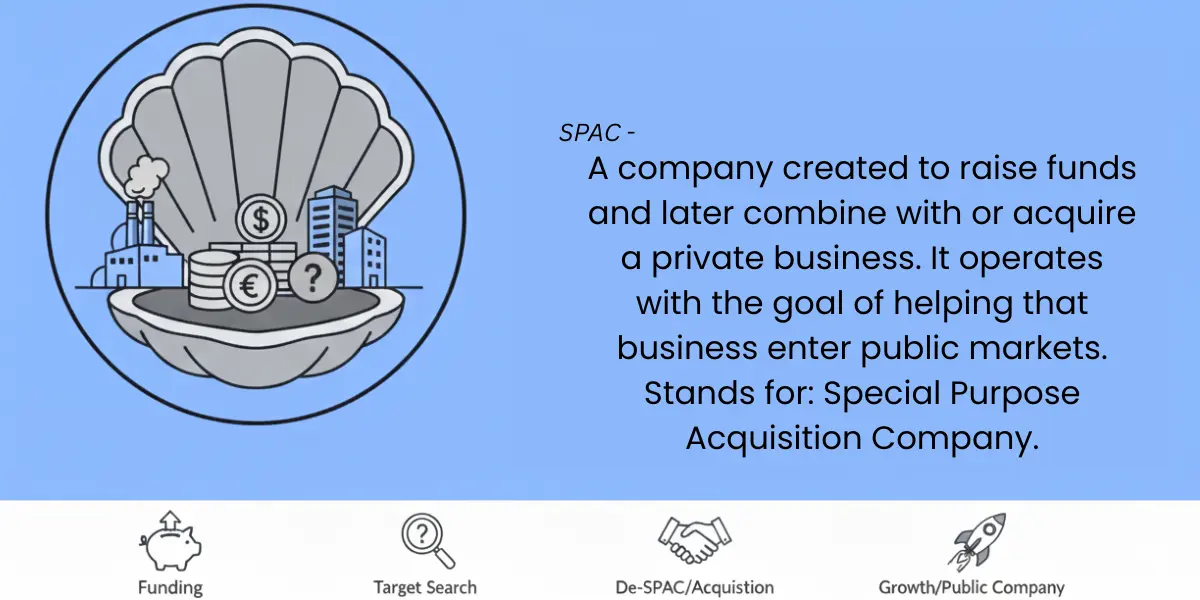
As the name suggests, it is a company that does not have any commercial operation or assets. It is formed specifically for the purpose of raising capital through a public offering and using this money to acquire another operating company or assets.
Think about that for a second. You create a company with absolutely nothing, no products, no services, no revenue. Then you take it public. Sounds crazy, right?
That’s why SPACs have been around for a long time and in the past were often referred to as “blank check companies.” You’re essentially asking investors to write you a blank check, trusting you’ll find something valuable to buy with their money.
Usually, SPAC at the time of formation or public offering defines the industry or geography wherein they would search for the target. For example, a SPAC might say, “We’re looking for tech companies in Southeast Asia” or “We’re targeting healthcare businesses in Europe.” Nonetheless, there are SPACs which are open-ended as well, basically giving sponsors a free pass to hunt anywhere.
Timeline of a SPAC Transaction: The Two-Year Race
Here’s where things get structured. A SPAC isn’t just some endless treasure hunt.
After raising money initially, SPAC has about 2 years to acquire a company. The clock starts ticking the moment SPAC raises the funds. Why two years? It typically takes a few months, 6 to 18 months to find a target company and acquire it.
Once the target company is acquired, the SPAC transaction is complete, also known as the De-SPAC transaction. That’s your finish line. The blank check company transforms into an actual operating business.
But what if the SPAC can’t find anyone to acquire?
In the absence of a De-SPAC transaction by the end of two years, the SPAC would get liquidated. Game over. Money goes back to investors. Sponsors lose their initial investment. This time limit keeps everyone accountable and prevents sponsors from sitting on investor money indefinitely.
Trust Account: Where SPAC Money Waits Safely
Before the De-SPAC transaction or liquidation of SPAC, the money collected through public offering on Day 1 is parked in the Trust Account. It’s not just sitting in someone’s checking account. It’s protected.
This money in the trust account can be broadly used either to fund the De-SPAC transaction or redeem shares. The redemption price is typically the issue price from the offering.
Why would investors want redemption? Two scenarios:
First, if the investors disagree with the M&A deal. Maybe the SPAC found a target, but you think it’s a terrible acquisition. You can take your money back.
Second, the SPAC is liquidated. If those two years expire without a deal, you will receive your original investment back.
This trust account structure is crucial. It protects public investors from sponsors making reckless decisions or dragging their feet forever.
Who Creates a SPAC? The Sponsor & Founder
The SPAC company is created by the founder, usually a popular figure with credibility in a particular industry, along with a PE Fund or Hedge Fund. These aren’t random people. They’re typically seasoned executives, former CEOs, or well-known investors whose reputations are on the line.
The founder’s money serves multiple purposes:
- Partly for bearing offering expense, working capital requirement, and acquisition expenses
- Partly used to fund the De-SPAC transaction
If the SPAC needs additional capital to pursue the business combination or pay its other expenses, the sponsor may loan additional funds to the SPAC. They’re not just sitting back collecting fees, they have real skin in the game.
Financing the Acquisition: PIPE & Committed Debt
In advance of signing an acquisition agreement, the SPAC will often arrange committed debt or equity financing. The most common form? A private investment in public equity, or “PIPE” commitment. This finances a portion of the purchase price for the business combination.
Once that financing is locked in, the SPAC publicly announces both the acquisition agreement and the committed financing. Everything becomes transparent.
Following the announcement of signing, the SPAC undertakes a mandatory shareholder vote or tender offer process. In either case, the SPAC offers public investors the right to return their public shares to the SPAC in exchange for an amount of cash roughly equal to the IPO issue price.
This is your last chance as an investor to bail out if you don’t like the deal. The SPAC isn’t forcing anyone to stay for the ride.
The De-SPAC Transaction: From Blank Check to Public Company
If the business combination is approved by the shareholders, when required and the financing and other conditions specified in the acquisition agreement are satisfied, the business combination will be consummated. This is the De-SPAC transaction.
The SPAC and the target business combine into a publicly traded operating company. The blank check disappears. A real operating business takes its place on the stock exchange.
SPACs usually acquire privately held companies through a reverse merger. The existing stockholders of the operating target company become the majority owners of the surviving entity. The end result? The previously private company becomes a publicly traded company.
This is the “magic” everyone talks about. A private company bypasses the traditional IPO process, the roadshows, the pricing drama, the market timing stress and becomes public through the SPAC merger.
Why This Matters: Understanding SPAC Investments
SPACs can also allow for some shareholders of the target company to be bought out as part of the business combination. Not everyone wants to stick around post-merger. The SPAC structure accommodates that flexibility.
For investors, understanding the timeline matters. That two-year window isn’t arbitrary, it creates urgency and accountability.
The trust account structure protects your capital. You’re not just handing money over and hoping for the best. You have redemption rights. You have voting rights. You have exit options.
For sponsors, the stakes are high. They invest their own money upfront. They loan additional funds when needed. Their reputations ride on finding quality targets and closing successful deals.
Conclusion
The process is methodical: public offering, trust account, two-year search, shareholder approval, De-SPAC transaction. Each step has built-in safeguards. Each player has incentives aligned toward closing a successful deal.
Understanding the trust account mechanics, the sponsor’s role, and the De-SPAC process is essential for anyone considering SPAC investments. These aren’t just shell companies doing shady deals. When structured properly, they’re legitimate acquisition vehicles with clear timelines and investor protections.
Next time someone mentions a SPAC, you’ll know it’s not magic, it’s strategy. And it all started with a hotel acquisition company in Amsterdam raising €115 million back in 2007. Pretty cool, right?