


The night before the CFA exam can be tense. After months of preparation, the last thing you want is to be turned away because of a forgotten passport or a prohibited item. Many candidates fail to realize that exam readiness is not just about studying; it’s also about knowing the rules. This guide will give you a clear CFA exam day checklist, official rules, and step-by-step instructions so you know exactly what to bring to the CFA exam and what not to bring (Do’s and Don’ts for CFA Exam Day). All information here follows CFA Institute guidelines.
The Ultimate CFA Exam Day Checklist: A Quick Summary
Must-Haves:
- Valid international passport
- CFA-approved calculator (plus spare battery if needed)
Key Actions:
- Arrive at least 45 minutes before their appointment
- Clear your calculator memory before the exam starts
- Use the optional 30-minute break wisely
Critical Reminders:
- Leave prohibited items at home
- Ensure your passport name matches exactly with your CFA Institute account
Your Pre-Exam Countdown: A Step-by-Step Timeline
One Month Before the Exam
- Log in to your CFA Program account to review your appointment date, time, and location.
- Ensure your passport expiry date is after the CFA exam date
- Plan your travel route to the test center in advance.
- Read the Rules of Procedure for Professional Conduct.
- Familiarize yourself with the CFA exam software tutorial.
The Week of the Exam
- Confirm appointment details once again.
- Learn how to clear the memory of your CFA-approved calculator.
- Keep your passport in a safe and easy-to-access place.
- Review the CFA exam personal belongings policy in detail.
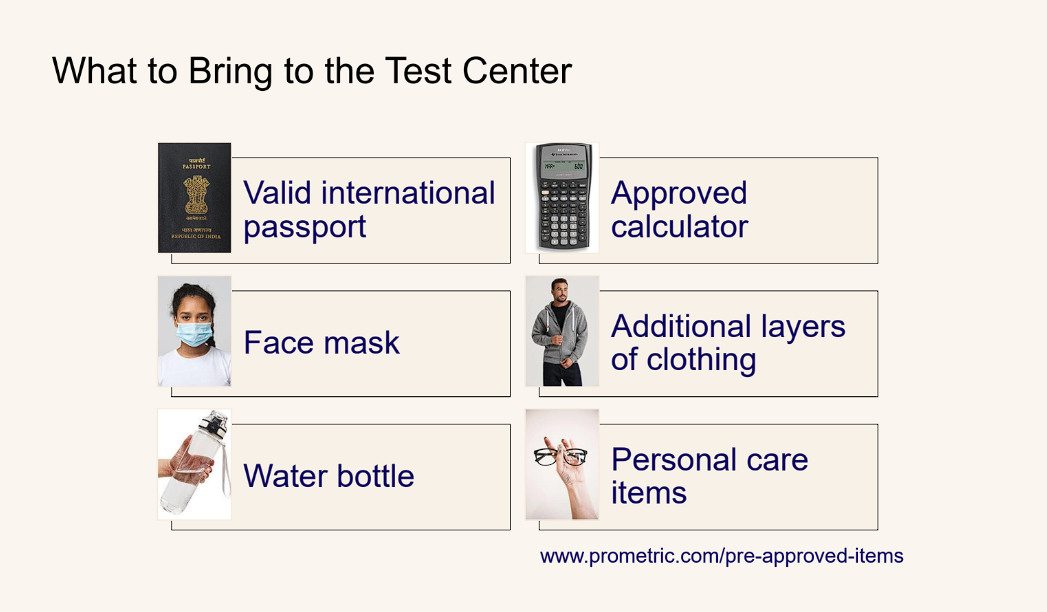
What to Bring to the Test Center: Permitted Items
- Valid international passport
- CFA approved calculator(s)
- Face mask (if required locally)
- Extra clothing layers for comfort
- Water bottle – transparent without any labels
- Personal care items like medication
These items are all allowed inside the exam room under the CFA exam rules and regulations. Carrying them ensures you are prepared for any situation during your CFA exam day experience. If you are wondering what to bring to the CFA exam, this list covers every essential item you must carry.
What NOT to Bring
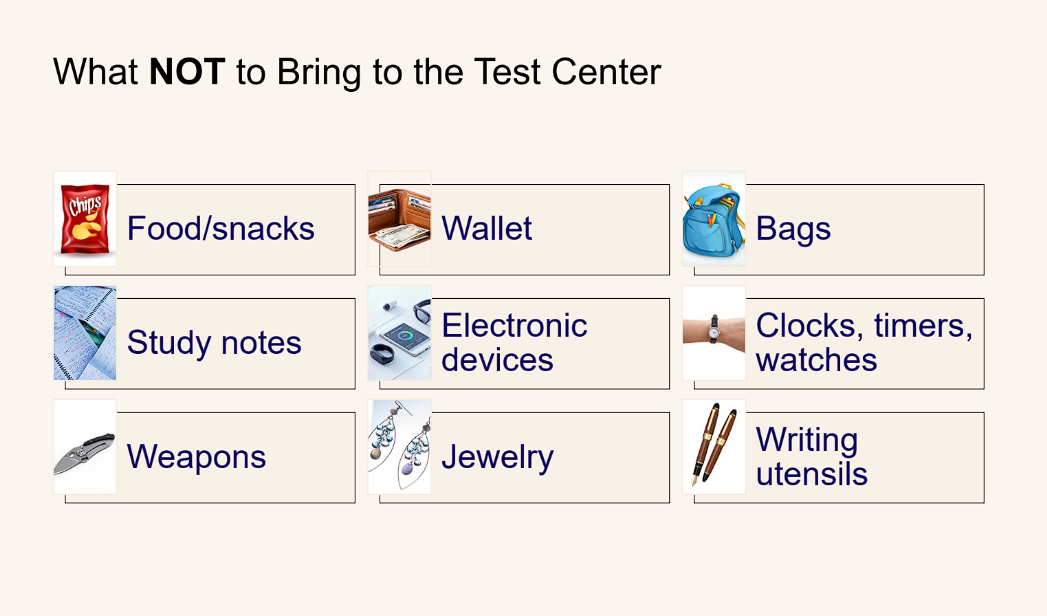
- Food or snacks
- Wallets, bags, or backpacks
- Study notes, printed materials, or books
- Electronic devices such as phones, smartwatches, timers, or clocks
- Weapons or sharp objects
- Jewelry
- Writing utensils
Understanding what not to bring CFA exam is just as important as knowing what to bring. Any violation of this list can lead to removal from the test center.
CFA Exam Day Interface & Process
- Understanding the Question Layout
On exam day, you’ll see a clear, structured interface designed to keep you focused. The question appears in the center of the screen, followed by multiple-choice answers. Navigation tools on the side let you move between questions, flag tricky ones for review, and keep track of your progress. Familiarizing yourself with this layout beforehand ensures you can move confidently through the exam without wasting time figuring out the system. - The Secure Login Step
Before the test begins, you’ll need to enter a unique keycode provided at the testing center. This login step is a quick but essential security measure that verifies your identity and grants access to your CFA exam. Being aware of this process ahead of time helps you start the test calmly, knowing exactly what to expect. - Practicing with the Real Interface
The CFA mock exams replicate the actual testing environment, right down to the question layout, font, and navigation style. By practicing with these tools, you’ll develop familiarity with the system, improve time management, and avoid unnecessary stress on exam day. This preparation makes the real test feel like just another practice session.
The Passport Rule: Why an Exact Name Match is Critical
Common mismatches in India include:
- CFA Account: S.M. L. Ramadugula | Passport: Sita Maha Lakshmi Ramadaugula
- CFA Account: Nandeesh Hullahalli | Passport: Nandeesh Hullahalli Nagarajaiah
- CFA Account: Chittur Gopalakrishnan Kaashi Vishwanathan Iyer | Passport: Gopalakrishnan Vishwanathan
What to Expect at the Test Center
- Follow this CFA exam day guide for a smooth start:
- Arrive at least 45 minutes before your scheduled appointment.
- Proctors will greet you and direct you to store your belongings.
- Your passport will be reviewed.
- You’ll receive paper and a writing utensil.
- You can bring your CFA-approved calculator.
- Proctor escorts you to your computer to start the exam.
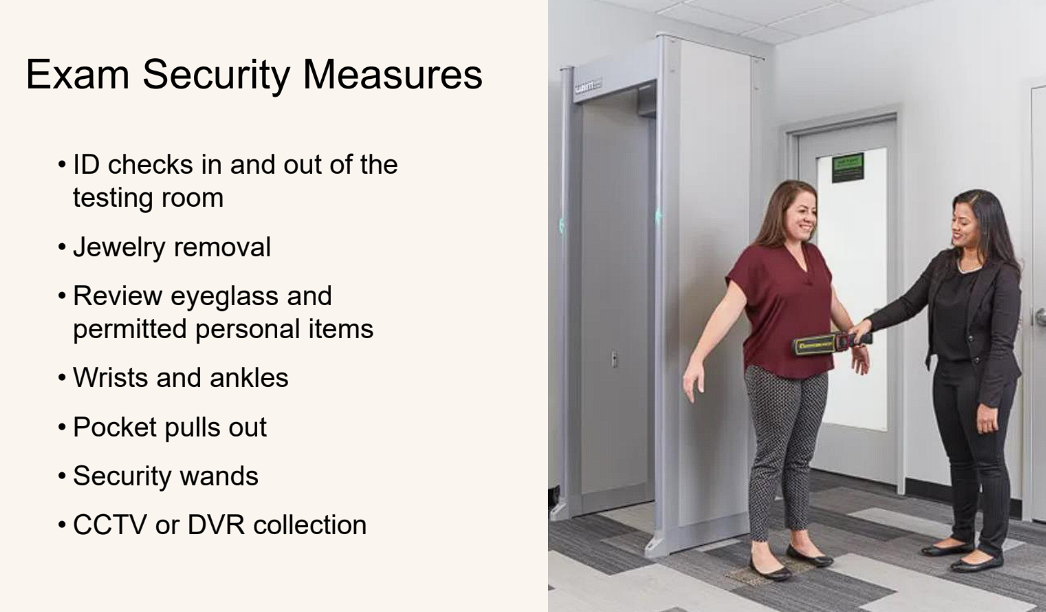
Test center security procedures include:
- ID checks on entry and exit
- Jewelry removal
- Review of eyeglasses and permitted items
- Wrists and ankles check
- Pockets turned inside out
- Security wands
- CCTV or DVR monitoring
Knowing what to bring to the CFA exam before you arrive ensures the check-in process is quick and stress-free.
Inside the Testing Room
Testing Room
- Comfortable chair and computer equipment in good working order
- Testing rooms will accommodate up to 25 candidates
- Smaller rooms will allow better control of temperature and lighting
- A smaller number of candidates will lead to fewer distractions
In the Testing Room – Exam Sequence
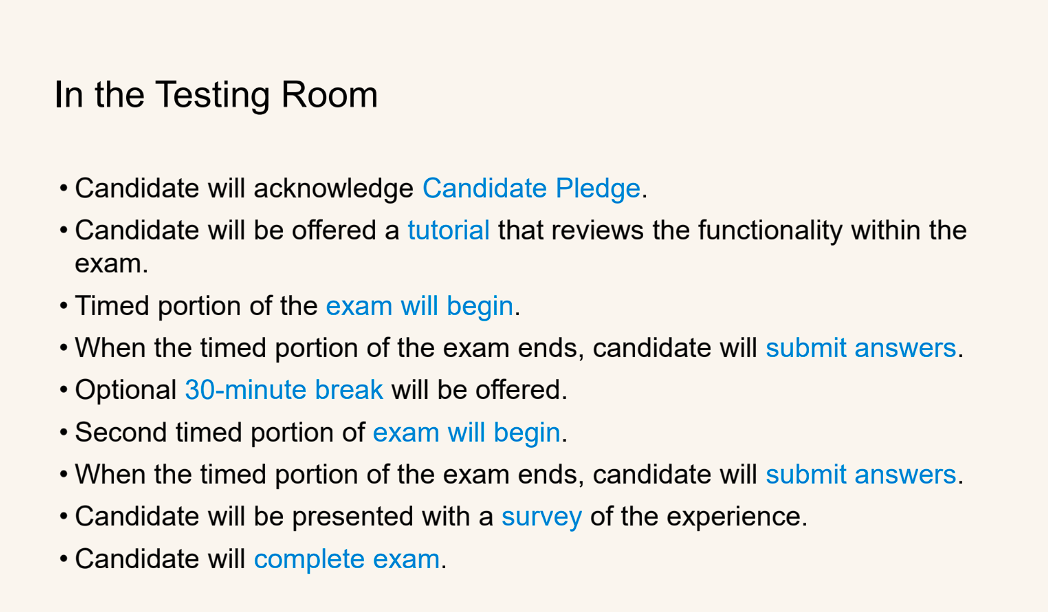
- Candidate will acknowledge Candidate Pledge
- The candidate will be offered a tutorial on exam functionality
- The first timed portion of the exam will begin (132–135 minutes)
- When the session ends, the candidate will submit answers
- An optional 30-minute break will be offered
- The second timed portion of the exam will begin (132–135 minutes)
- When the session ends, the candidate will submit answers
- The candidate will be presented with a survey of the experience
- The candidate will complete the exam/exit process
After the Exam: Understanding Your Results and Options
Your score report will show:
- Pass or Did Not Pass status
- Score compared to the Minimum Passing Score (MPS)
- Topic-wise performance breakdown
There is no minimum score required per topic; these percentages are for guidance.
Deferrals:
Avoid deferring unless necessary. Pass rates are lower for deferred candidates. Deferring means losing time and momentum.
Why sit as planned?
- Time left for last-minute improvements
- You already have study momentum
- Real exam experience is valuable